
What My High School Self Taught Me About Confidence
Updated: May 25, 2025
My sister's confidence as a freshman inspired me—but it wasn’t until I found my own sense of calm and belief that I had my breakthrough. This blog explores how moments of quiet confidence, not just training, can lead to unforgettable wins.

My sister stood on the edge of the curb, dropping her heel to feel a strong stretch in her calf. I sat on the warm cement of the driveway, absorbing the October sun after a 7-mile run together.
We’re older now and live much farther apart, but my sister and I still bond over running: past, present, and future goals, races, and training. Going for a run with her is one of my favorite parts about visiting home.
“I don’t know,” she reflected when I asked her about her freshman year of high school. “I just had this unwavering belief that I was going to win.”
For those that don’t know, my older sister Jessa is an insanely talented runner, and the reason I ever got into this sport in the first place. As a true freshman in high school, she won state in the 800m, 400m, and 4x400m relay (which she anchored).
A freshman winning all three of these events is not something that happens often. But Jessa, despite not having any real reason to believe that she was the best, didn't care that she was “only a freshman” and decided that she was going to win, anyways.
What Does It Mean to Rise to the Occasion?
Jessa never competed at a track meet of that caliber before. Sure, she won races during the regular season around Southwest Nebraska, but those meets were much, much smaller than the state meet. And they usually featured the same competition again and again and again.
But the stadium of 30,000 people, the unfamiliar competition, and the higher stakes didn’t cause alarm in Jessa’s head and heart. She simply laced up her spikes and did what she had always done: win.
Throughout Jessa’s running career, when it came down to it, whether it was anchoring the last leg of the 4x4 or scoring points at conference, Jessa rose to the occasion despite her previous struggles.
By definition, rising to the occasion happens when you successfully navigate a difficult situation or problem, especially by working harder or performing better than usual. Sports present the most obvious examples, but it happens in so many other life situations: giving a speech when you’re nervous, taking on more work when a coworker leaves, becoming a new parent, starting your own business.
Basically any time life presents you with a challenging, uncomfortable situation, you subconsciously make a decision on how you’re going to navigate it.
Is It Easier for Some People to Rise to the Occasion Than Others?
Andrew Fiouzi quotes clinical psychologist Allen Wagner in his blog “The Psychology of Rising to the Occasion.” According to Wagner, “If you see how it finishes, and you take the steps ahead of you, one at a time, as opposed to listening to inner voices of doubt or excuses, then you’re far more likely to execute. People are ultimately far more powerful than they think.”
On the flip side, though, Fiouzi brings up an article written by award-winning psychologist Ryan Niemic, who believes everyone possesses both tonic and phasic strengths. Tonic strengths are the ones that show up in your everyday life, while phasic strengths are situational. And when a situation calls for you to bring out your phasic strength, you do it very strongly. An example of this would be assuming a leadership position when a manager quits, despite you not being called on to do it.
And what do I believe? Well, I think it’s a mixture of both.
High School Me Rose Up. But How Did She Do It?
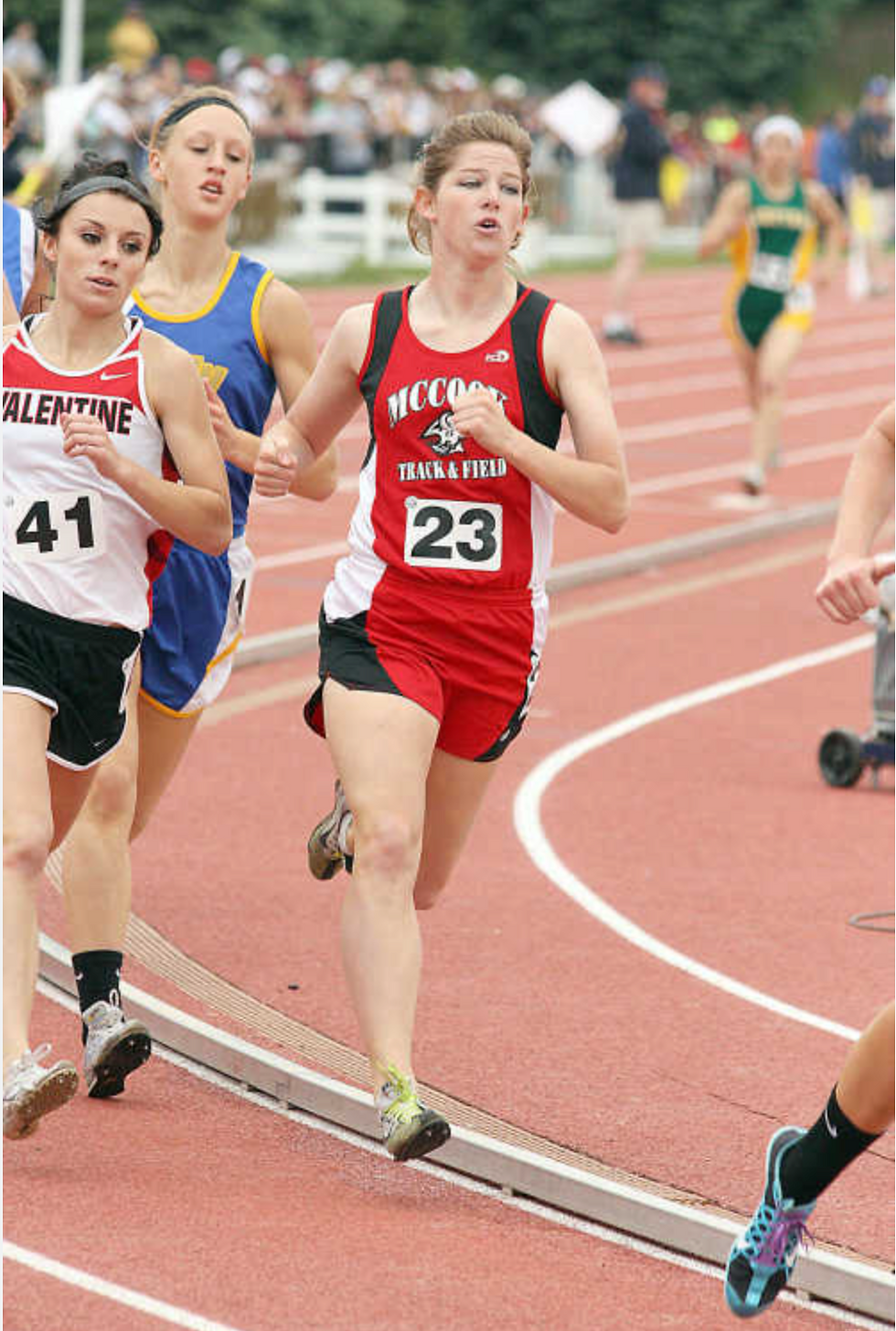
I struggled my freshman year of high school. Yes, I saw some success on the track, but it didn’t live up to the expectations I had for myself. In fact, I actually ran slower as a freshman in high school than I did as an eighth-grader.
At the state meet, I barely made the 400m final, and got almost dead-last in the 800m. I did manage to win a gold medal in the 4x4 though (thanks to my teammates, my sister included!).

But despite that year of struggle and disappointment, I had a huge breakthrough as a sophomore.
I remember chatting with my coach in the hotel lobby sitting the night before the state championship 800. I don’t remember exactly what I said or asked, but I remember my coach commenting, “it’s probably going to take 2:14 or 2:15 to win the All-Class Gold.” (For non-Nebraskan folk, that means the fastest of EVERYONE, despite what division your school is in.)
With no hesitation at all, I immediately thought “yeah I can do that,” even though I had only broken the 2:20 barrier once.
The next morning, I remember simultaneously feeling very nervous and very calm during my warmup. The gun went off, and I was not anywhere near the front. But I didn’t panic. I didn’t feel worried. After the first lap, I started picking people off, one by one, and crossed the finish line in 2:15 to win my first All-Class Gold.

How the Heck Did I Pull That Off?
I’ll never forget how I felt before this race: a feeling of calm, yet a feeling of nervousness. A feeling of “I can do it,” yet a feeling of no expectation.
Was it phasic strength that led me to win? Was it my inner voice? Probably both.
At that point in high school, I didn’t have the toll of social media constantly on my mind. I had NO idea what anybody else was doing in training, nor did I care. I assumed I was doing the hardest training of anyone I competed against (I later learned I definitely was not).
I think knowing/seeing what everyone else was doing silenced my inner critic, letting my phasic strength (whatever it might be? bravery?) shine.
Going Forward
So what is the takeaway here?
Training only takes you so far. Everyone on the start line is fit, hungry, and ready to go. And everyone wants to win.
But the ones who do end up winning are the ones in the right headspace. The ones who focus on themselves and their own training. The ones who stay calm by blocking out the noise and distractions going on around them.
So maybe you don’t have the ‘best’ workouts or the fastest race time going into the race. But don’t count yourself out. What matters is showing up with that unwavering belief in yourself and rising to the occasion. Like 15-year-old Jessa. Like 15-year-old me.
And as for my current quest to compete at the professional level… like my sophomore year of high school, like when I was the slowest runner in my college recruiting class and willed myself on the cross country team as a true freshman, I’ve risen to the top despite all odds.
I’ve done it before. I can do it again.
Comments